Collections Framework
“The Collections Framework provides a unified architecture for representing and manipulating collections, enabling you to focus on what you want to accomplish rather than how to accomplish it.” - Oracle Java Documentation
🎯 What is Java Collections Framework?
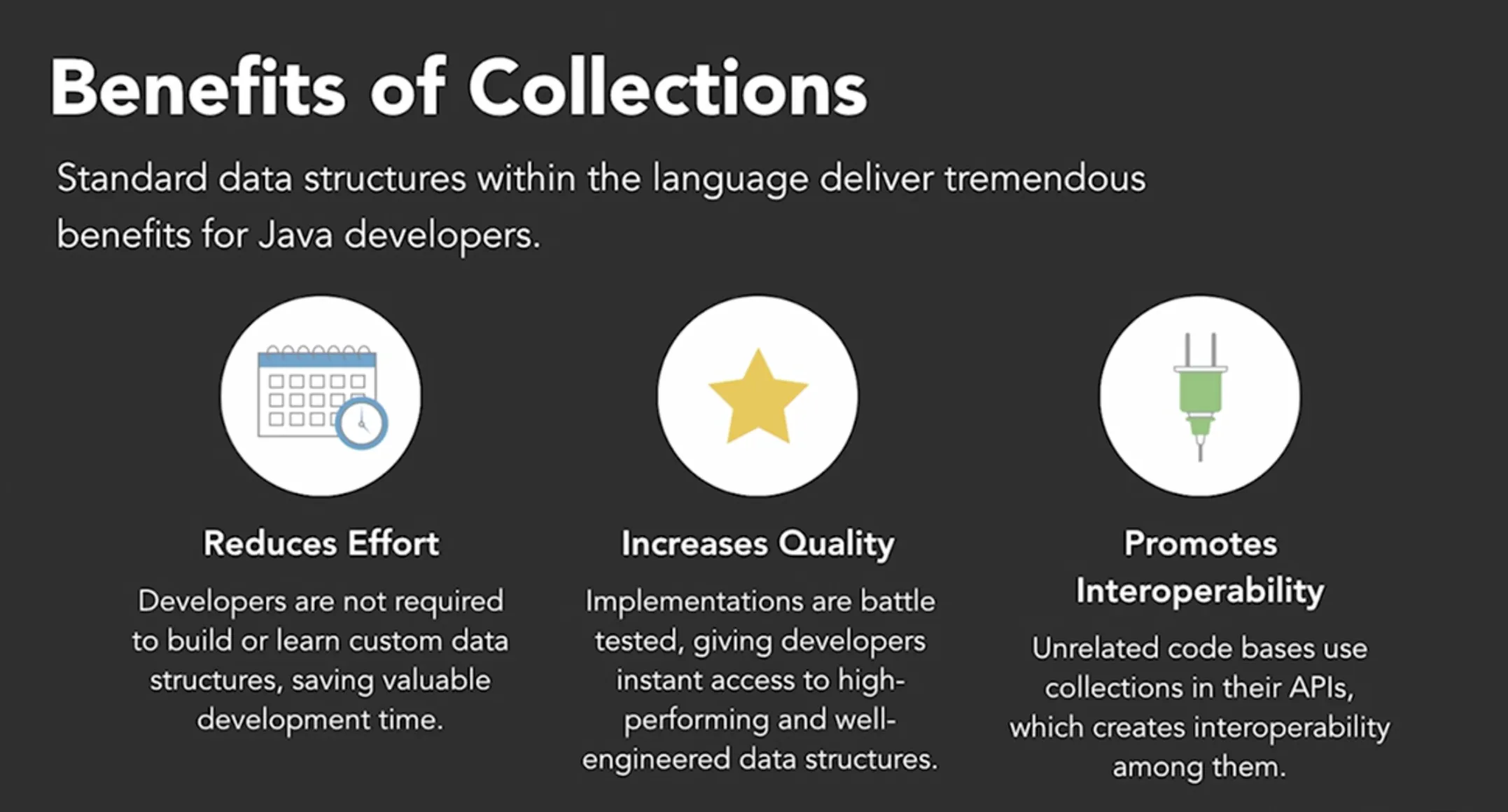
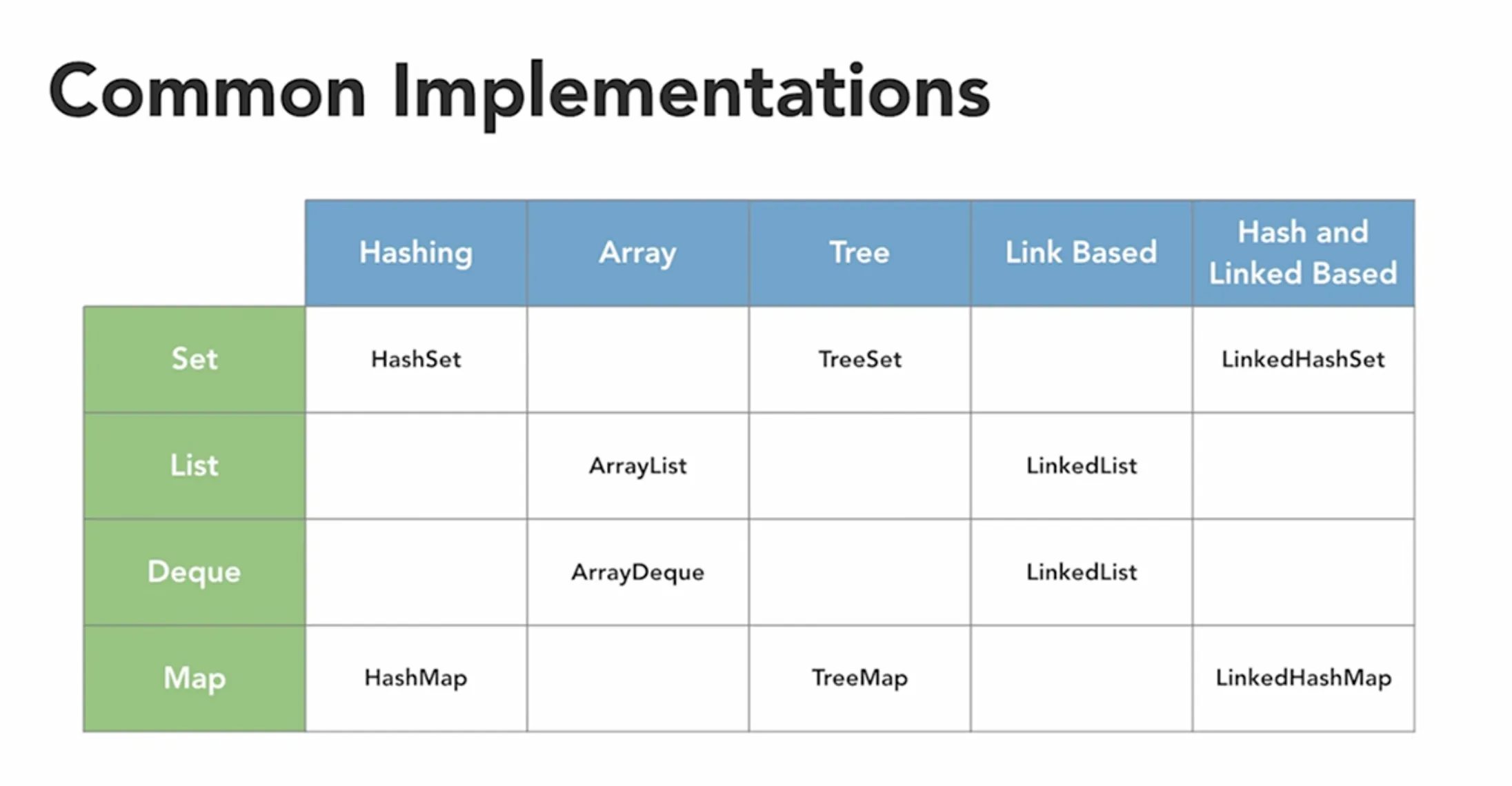
Section titled “🎯 What is Java Collections Framework?”The Java Collections Framework is a unified architecture for representing and manipulating collections of objects. It provides a set of interfaces, implementations, and algorithms to handle groups of objects efficiently, eliminating the need to write custom data structures for most use cases.
🌳 Core Interface Hierarchy
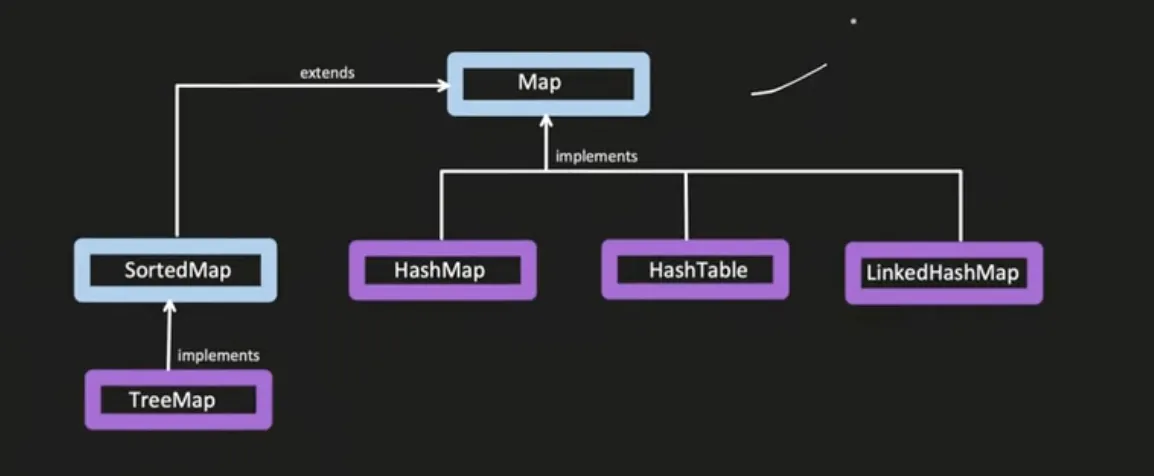
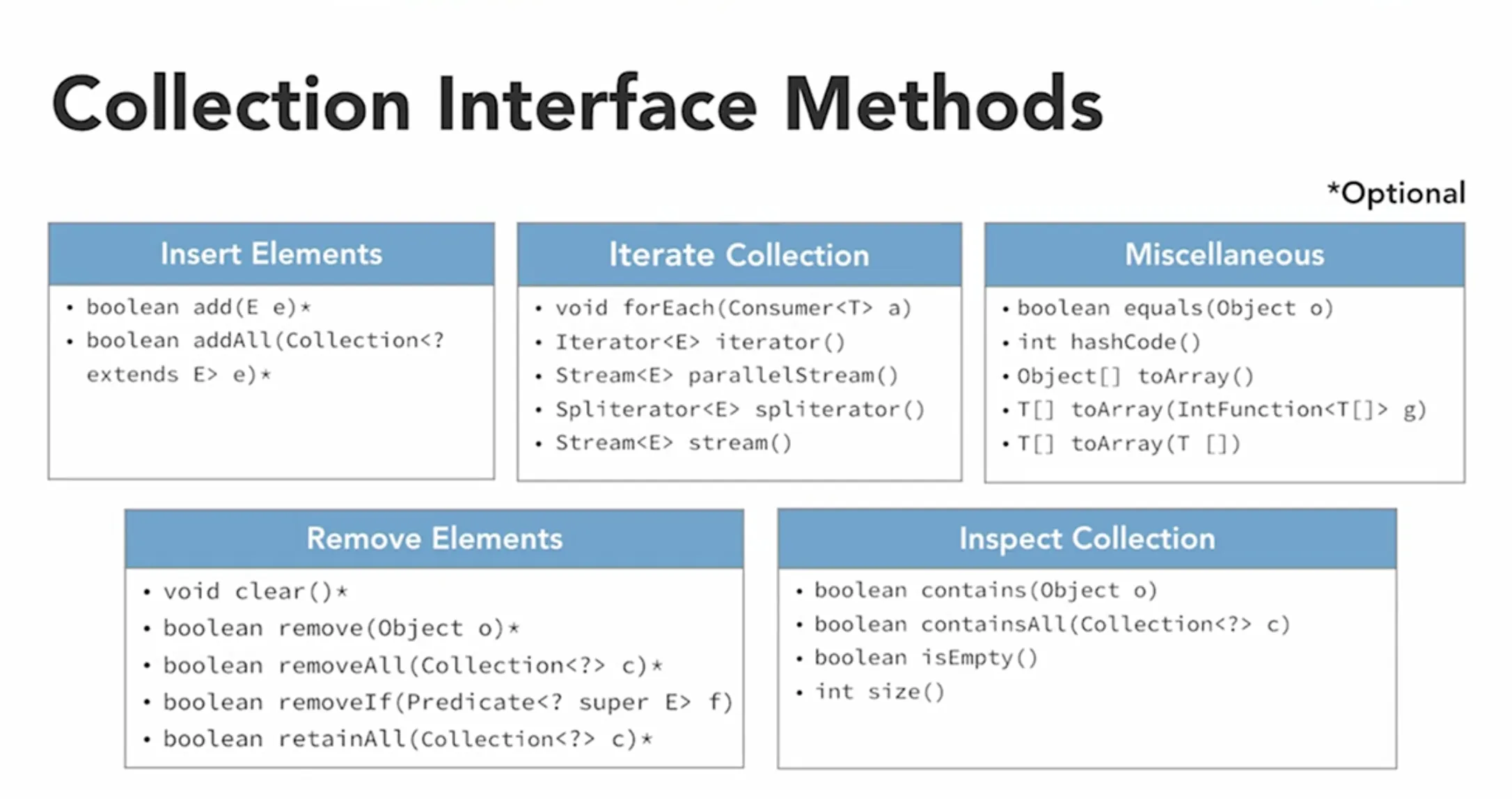
Section titled “🌳 Core Interface Hierarchy”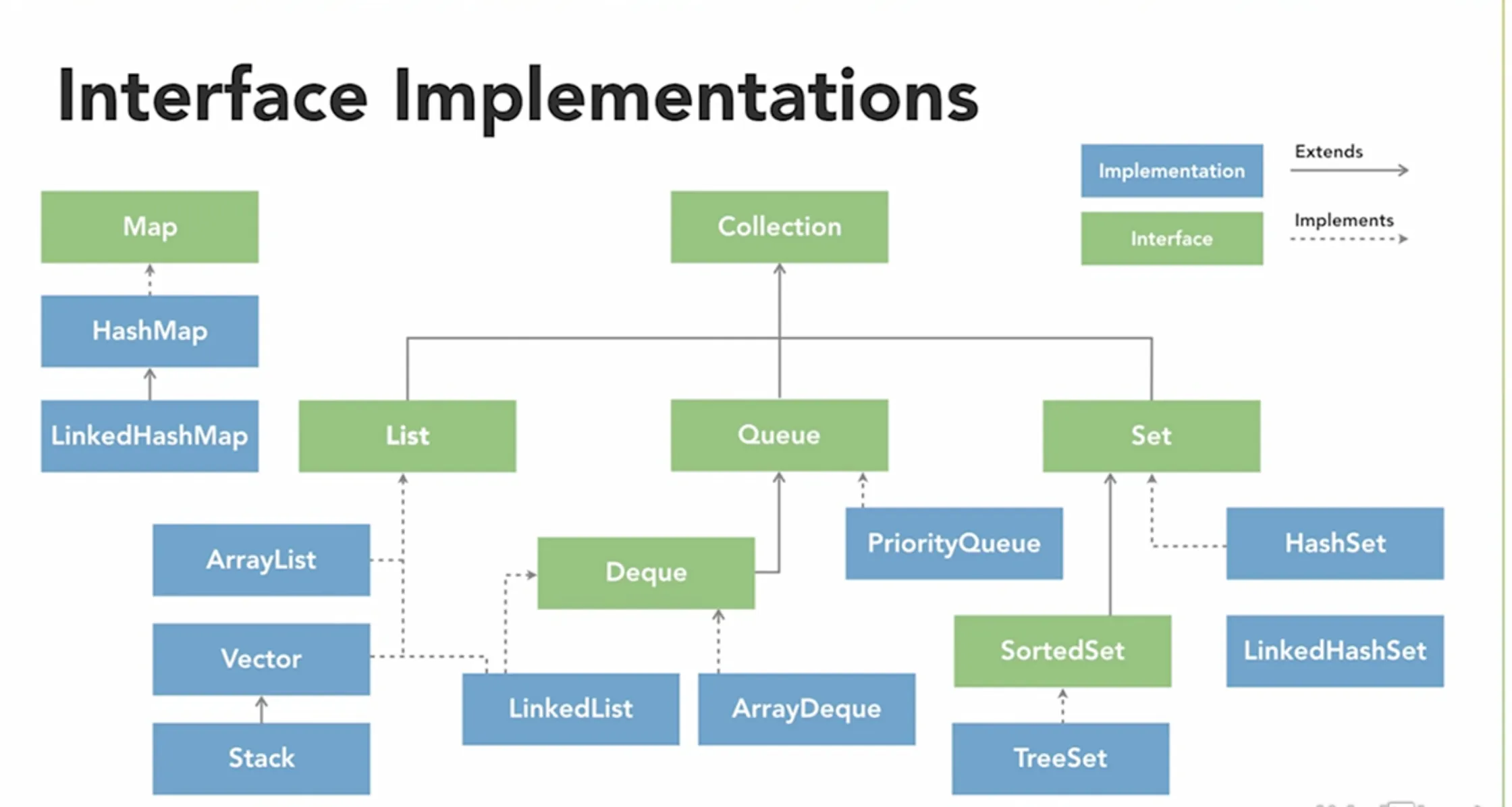
📈 Performance Characteristics Quick Reference
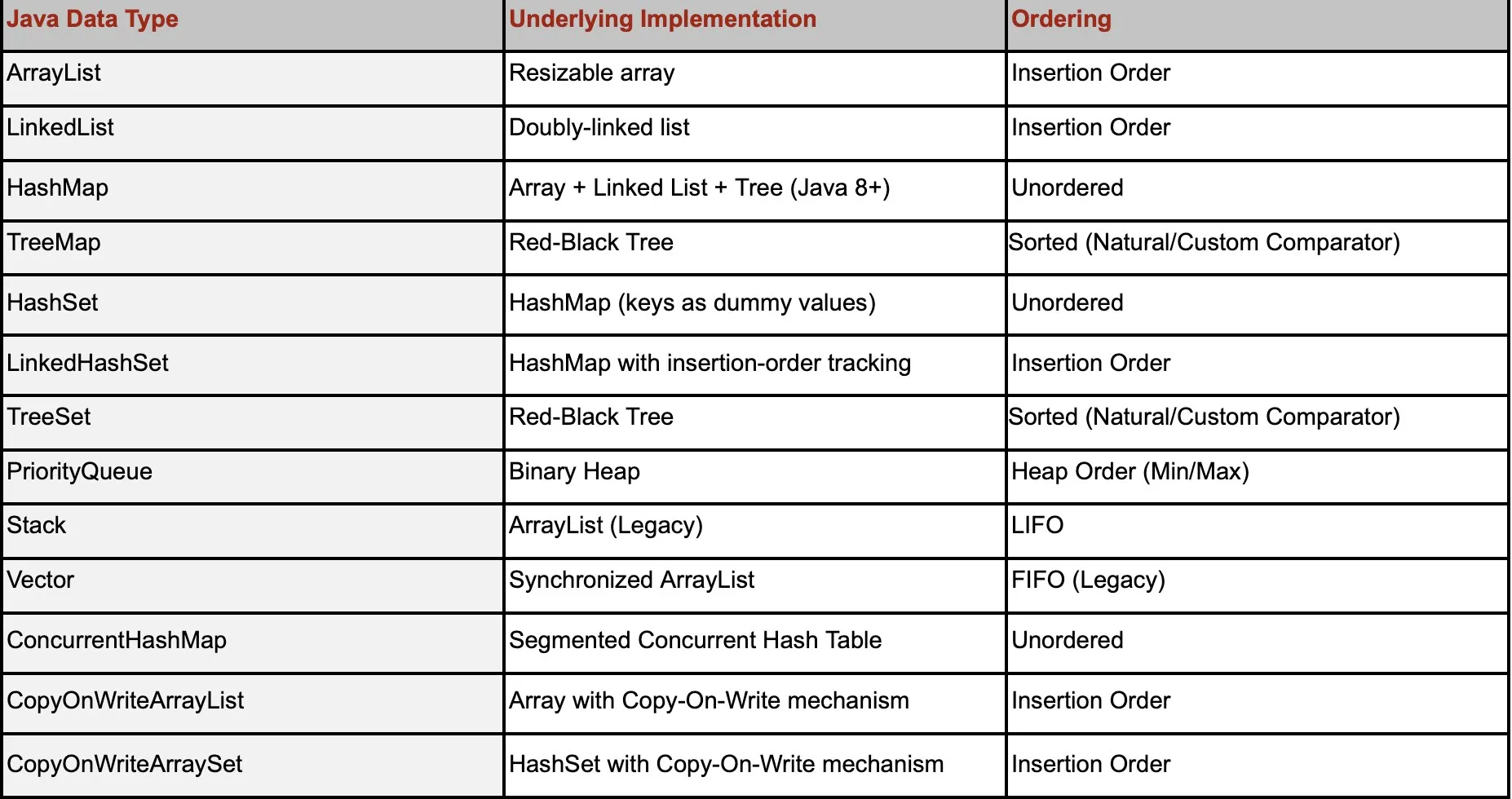
Section titled “📈 Performance Characteristics Quick Reference”| Implementation | Access | Search | Insertion | Deletion | Ordering | Thread-Safe |
|---|---|---|---|---|---|---|
| ArrayList | O(1) | O(n) | O(1) amortized | O(n) | Insertion | ❌ |
| LinkedList | O(n) | O(n) | O(1) | O(1) | Insertion | ❌ |
| HashSet | N/A | O(1) | O(1) | O(1) | No | ❌ |
| TreeSet | N/A | O(log n) | O(log n) | O(log n) | Sorted | ❌ |
| HashMap | O(1) | O(1) | O(1) | O(1) | No | ❌ |
| TreeMap | O(log n) | O(log n) | O(log n) | O(log n) | Sorted | ❌ |
🎯 When to Use Which Collection?
Section titled “🎯 When to Use Which Collection?”📝 Decision Framework
Section titled “📝 Decision Framework”🤔 What type of data are you storing?
├── 🔑 Key-Value pairs?│ ├── Need sorting? → TreeMap│ ├── Need insertion order? → LinkedHashMap│ └── Best performance? → HashMap│├── 📋 Unique elements only?│ ├── Need sorting? → TreeSet│ ├── Need insertion order? → LinkedHashSet│ └── Best performance? → HashSet│├── 📊 Ordered elements with duplicates?│ ├── Frequent random access? → ArrayList│ ├── Frequent insertion/deletion? → LinkedList│ └── Thread safety required? → Vector or Collections.synchronizedList()│└── 🎯 Processing queue? ├── Priority-based? → PriorityQueue ├── FIFO operations? → ArrayDeque └── Both ends access? → ArrayDeque🛠️ Common Patterns and Idioms
Section titled “🛠️ Common Patterns and Idioms”🔍 Initialization Patterns
Section titled “🔍 Initialization Patterns”// Diamond operator (Java 7+)List<String> list = new ArrayList<>();Map<String, Integer> map = new HashMap<>();
// Factory methods (Java 9+)List<String> immutableList = List.of("a", "b", "c");Set<Integer> immutableSet = Set.of(1, 2, 3);Map<String, Integer> immutableMap = Map.of("one", 1, "two", 2);
// Arrays.asList() for quick initializationList<String> list = Arrays.asList("a", "b", "c");
// Collection copy constructorsList<String> copy = new ArrayList<>(original);Set<String> uniqueItems = new HashSet<>(listWithDuplicates);🔄 Iteration Patterns
Section titled “🔄 Iteration Patterns”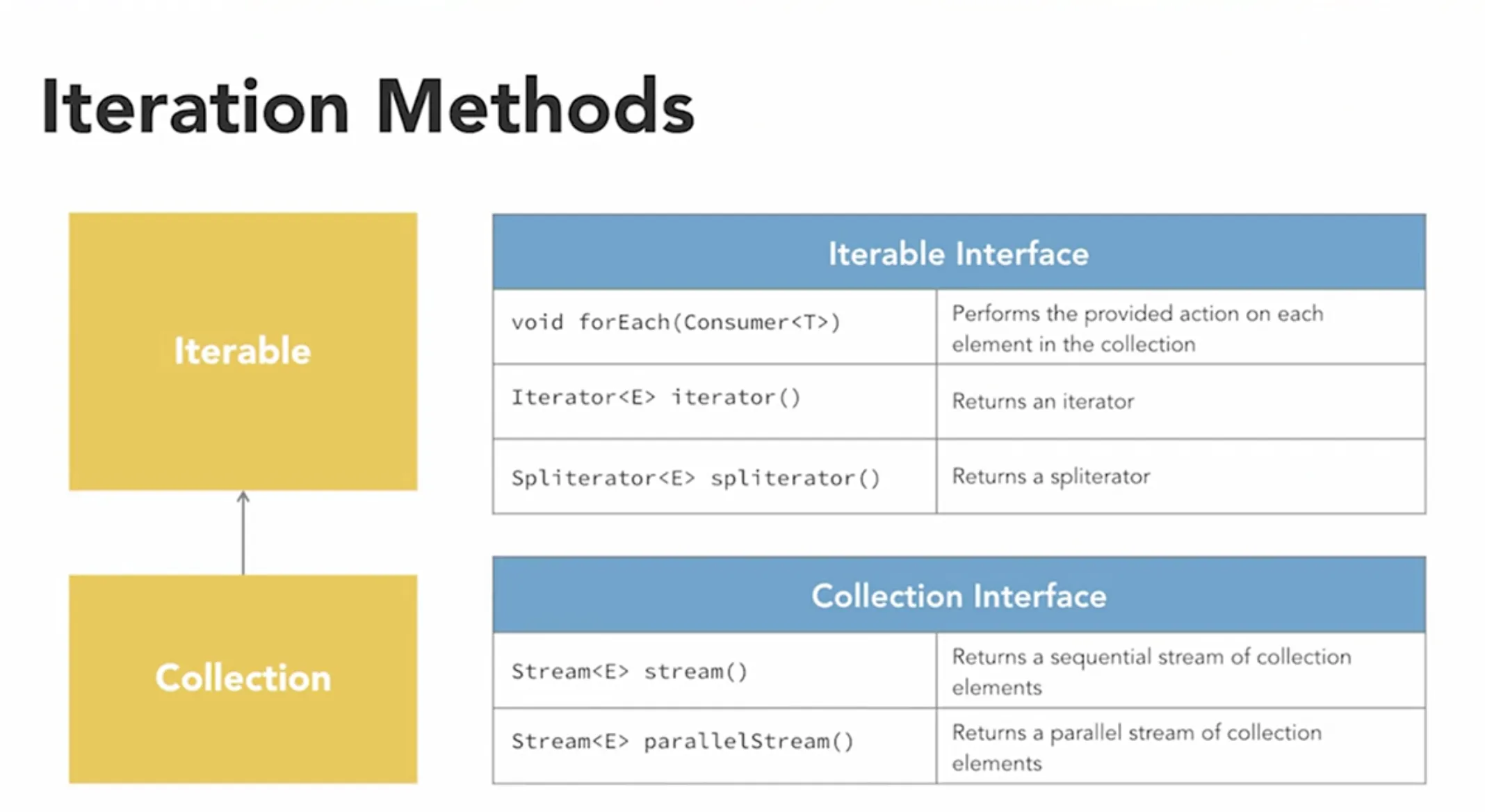
// Enhanced for-loopfor (String item : collection) {    process(item);}
// Iterator with removalIterator<String> it = collection.iterator();while (it.hasNext()) {    String item = it.next();    if (shouldRemove(item)) {        it.remove(); // Safe removal during iteration    }}
// Stream APIcollection.stream()    .filter(predicate)    .map(mapper)    .collect(Collectors.toList());
🔧 Utility Operations
Section titled “🔧 Utility Operations”// SortingCollections.sort(list);Collections.sort(list, comparator);
// Searchingint index = Collections.binarySearch(sortedList, key);
// Min/MaxString min = Collections.min(collection);String max = Collections.max(collection, comparator);
// Frequency and disjoint checksint count = Collections.frequency(collection, item);boolean noCommon = Collections.disjoint(collection1, collection2);