Multithreading Locks
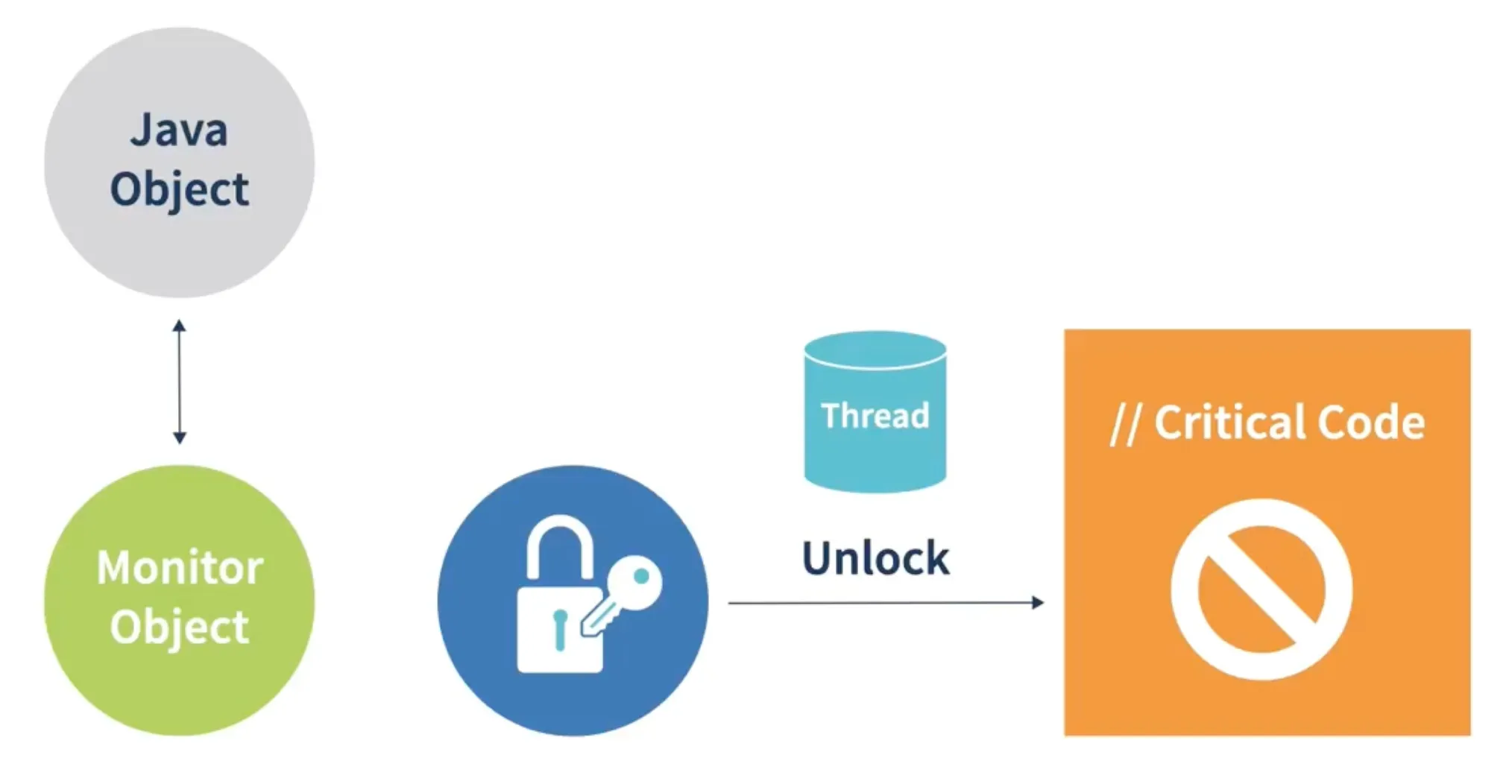
🔐 Why Locks?
Section titled “🔐 Why Locks?”Locks are used to ensure only one thread accesses shared data at a time.
🧠 Key Concepts
Section titled “🧠 Key Concepts”| Concept | Description |
|---|---|
| Critical Section | Shared code that needs exclusive access |
| Race Condition | Bug from unsynchronized access |
| Deadlock | Two threads waiting on each other’s locks |
| Mutual Exclusion | Ensures one thread executes a section at a time |
Comparison Table
Section titled “Comparison Table”| Feature | synchronized | ReentrantLock | ReadWriteLock | volatile |
|---|---|---|---|---|
| Thread Safety | ✅ | ✅ | ✅ | ❌ (visibility only) |
| Read/Write Split | ❌ | ❌ | ✅ | ❌ |
| Fairness | ❌ | ✅ (optional) | ✅ | ❌ |
| Manual Lock Control | ❌ | ✅ | ✅ | ❌ |
| Performance (Reads) | ⚠️ | ⚠️ | ✅ | ✅ |
🔁 synchronized Keyword
Section titled “🔁 synchronized Keyword”🔒 Basic Use
Section titled “🔒 Basic Use”public synchronized void increment() { count++;}🔒 Block Scope
Section titled “🔒 Block Scope”synchronized(this) { count++;}🔒 Static Method
Section titled “🔒 Static Method”public static synchronized void increment() { count++;}⚠ Limitations
Section titled “⚠ Limitations”- No timeout
- No lock status check
- No fairness control
✅ Example
Section titled “✅ Example”public class SyncExample { private int count = 0;
public synchronized void increment() { count++; }
public int getCount() { return count; }
public static void main(String[] args) throws InterruptedException { SyncExample counter = new SyncExample(); Thread t1 = new Thread(() -> { for (int i = 0; i < 1000; i++) counter.increment(); }); Thread t2 = new Thread(() -> { for (int i = 0; i < 1000; i++) counter.increment(); });
t1.start(); t2.start(); t1.join(); t2.join();
System.out.println("Count: " + counter.getCount()); }}🔄 Output
Section titled “🔄 Output”Count: 2000🧠 Insight
Section titled “🧠 Insight”synchronized ensures only one thread at a time enters the critical section. Good for simple synchronization but lacks flexibility.
🔧 ReentrantLock
Section titled “🔧 ReentrantLock”✨ Features
Section titled “✨ Features”- Manual control (
lock(),unlock()) - Fairness support
- Timeout & interruptible locks
✅ Example
Section titled “✅ Example”ReentrantLock lock = new ReentrantLock();lock.lock();try { count++;} finally { lock.unlock();}⏱ With Timeout
Section titled “⏱ With Timeout”if (lock.tryLock(1, TimeUnit.SECONDS)) { try { // critical section } finally { lock.unlock(); }}✅ Example
Section titled “✅ Example”import java.util.concurrent.locks.ReentrantLock;
public class ReentrantLockExample { private int count = 0; private final ReentrantLock lock = new ReentrantLock();
public void increment() { lock.lock(); try { count++; } finally { lock.unlock(); } }
public int getCount() { return count; }
public static void main(String[] args) throws InterruptedException { ReentrantLockExample example = new ReentrantLockExample(); Thread t1 = new Thread(() -> { for (int i = 0; i < 1000; i++) example.increment(); }); Thread t2 = new Thread(() -> { for (int i = 0; i < 1000; i++) example.increment(); });
t1.start(); t2.start(); t1.join(); t2.join();
System.out.println("Count: " + example.getCount()); }}🔄 Output
Section titled “🔄 Output”Count: 2000🧠 Insight
Section titled “🧠 Insight”Use ReentrantLock for advanced features: tryLock, fairness, and interruptible locks.
📖 ReadWriteLock
Section titled “📖 ReadWriteLock”🔍 Use Case
Section titled “🔍 Use Case”Multiple readers OR one writer – good for read-heavy scenarios.
✅ Example
Section titled “✅ Example”ReadWriteLock rwLock = new ReentrantReadWriteLock();rwLock.readLock().lock(); // for readingrwLock.writeLock().lock(); // for writing✅ Example
Section titled “✅ Example”import java.util.concurrent.locks.ReentrantReadWriteLock;
public class ReadWriteExample { private int data = 0; private final ReentrantReadWriteLock rw = new ReentrantReadWriteLock();
public void write() { rw.writeLock().lock(); try { data++; System.out.println("Written: " + data); } finally { rw.writeLock().unlock(); } }
public void read() { rw.readLock().lock(); try { System.out.println("Read: " + data); } finally { rw.readLock().unlock(); } }
public static void main(String[] args) { ReadWriteExample obj = new ReadWriteExample(); obj.write(); obj.read(); }}🔄 Output
Section titled “🔄 Output”Written: 1Read: 1🧠 Insight
Section titled “🧠 Insight”Improves performance in read-heavy environments by allowing multiple concurrent reads.
🌀 StampedLock
Section titled “🌀 StampedLock”🚀 Feature
Section titled “🚀 Feature”Allows optimistic read – great for fast non-blocking reads.
✅ Optimistic Read
Section titled “✅ Optimistic Read”long stamp = lock.tryOptimisticRead();int result = data;if (!lock.validate(stamp)) { stamp = lock.readLock(); result = data; lock.unlockRead(stamp);}✅ Example
Section titled “✅ Example”import java.util.concurrent.locks.StampedLock;
public class StampedLockExample { private int data = 0; private final StampedLock lock = new StampedLock();
public void write() { long stamp = lock.writeLock(); try { data++; System.out.println("Write: " + data); } finally { lock.unlockWrite(stamp); } }
public void optimisticRead() { long stamp = lock.tryOptimisticRead(); int current = data; if (!lock.validate(stamp)) { stamp = lock.readLock(); try { current = data; } finally { lock.unlockRead(stamp); } } System.out.println("Read: " + current); }
public static void main(String[] args) { StampedLockExample ex = new StampedLockExample(); ex.write(); ex.optimisticRead(); }}🔄 Output
Section titled “🔄 Output”Write: 1Read: 1🧠 Insight
Section titled “🧠 Insight”Great for performance when contention is low, using optimistic reading to avoid locks.
🧵 Condition Variables
Section titled “🧵 Condition Variables”⏸ Wait & Notify
Section titled “⏸ Wait & Notify”Replaces wait/notify with more flexible await/signal.
✅ Example
Section titled “✅ Example”lock.lock();try { while (queue.isEmpty()) { notEmpty.await(); } // process notFull.signal();} finally { lock.unlock();}🔢 Semaphore
Section titled “🔢 Semaphore”🎛 Controls Access
Section titled “🎛 Controls Access”Allows N threads to access a resource simultaneously.
✅ Example
Section titled “✅ Example”Semaphore sem = new Semaphore(3);sem.acquire();// access resourcesem.release();✅ Example
Section titled “✅ Example”import java.util.concurrent.Semaphore;
public class SemaphoreExample { private static final Semaphore sem = new Semaphore(2);
public static void main(String[] args) { Runnable task = () -> { try { System.out.println(Thread.currentThread().getName() + " waiting..."); sem.acquire(); System.out.println(Thread.currentThread().getName() + " acquired."); Thread.sleep(1000); System.out.println(Thread.currentThread().getName() + " releasing..."); sem.release(); } catch (InterruptedException e) { e.printStackTrace(); } };
for (int i = 0; i < 4; i++) new Thread(task).start(); }}🔄 Output
Section titled “🔄 Output”Thread-0 waiting...Thread-1 waiting...Thread-0 acquired.Thread-1 acquired.Thread-2 waiting...Thread-3 waiting...Thread-0 releasing...Thread-1 releasing...Thread-2 acquired.Thread-3 acquired.🧠 Insight
Section titled “🧠 Insight”Perfect for limiting concurrent access, such as in connection pools or rate limiters.
⚙ Lock-Free Programming
Section titled “⚙ Lock-Free Programming”🔁 Atomic Operations
Section titled “🔁 Atomic Operations”✅ Example
Section titled “✅ Example”AtomicInteger count = new AtomicInteger(0);count.incrementAndGet();✅ Compare-and-Set
Section titled “✅ Compare-and-Set”AtomicReference<String> value = new AtomicReference<>("a");value.compareAndSet("a", "b");✅ Example
Section titled “✅ Example”import java.util.concurrent.atomic.AtomicInteger;
public class AtomicExample { private final AtomicInteger count = new AtomicInteger(0);
public void increment() { count.incrementAndGet(); }
public int get() { return count.get(); }
public static void main(String[] args) { AtomicExample obj = new AtomicExample(); obj.increment(); System.out.println("Count: " + obj.get()); }}🔄 Output
Section titled “🔄 Output”Count: 1🧠 Best Practices
Section titled “🧠 Best Practices”- Always use
try-finallywith manual locks - Keep critical sections small
- Avoid nested locks
- Use atomic types for simple counters
- Prefer lock-free when possible
📊 Summary Table
Section titled “📊 Summary Table”| Lock Type | Use Case | Performance | Complexity |
|---|---|---|---|
| synchronized | Simple lock | ✅ Good | 🟢 Easy |
| ReentrantLock | Fine control | ✅ Great under load | 🟡 Medium |
| ReadWriteLock | Read-heavy | ✅ Excellent | 🟡 Medium |
| StampedLock | High concurrency | ✅ Best for reads | 🔴 High |
| Semaphore | Limit access | ✅ Scalable | 🟡 Medium |
| Atomic Variables | Lock-free operations | ✅ Fastest | 🟢 Easy |