
Load Balancer Fundamentals
Load Balancer in One Line
Section titled “Load Balancer in One Line”A load balancer sits in front of service instances and routes traffic so no single backend becomes a bottleneck or single point of failure.
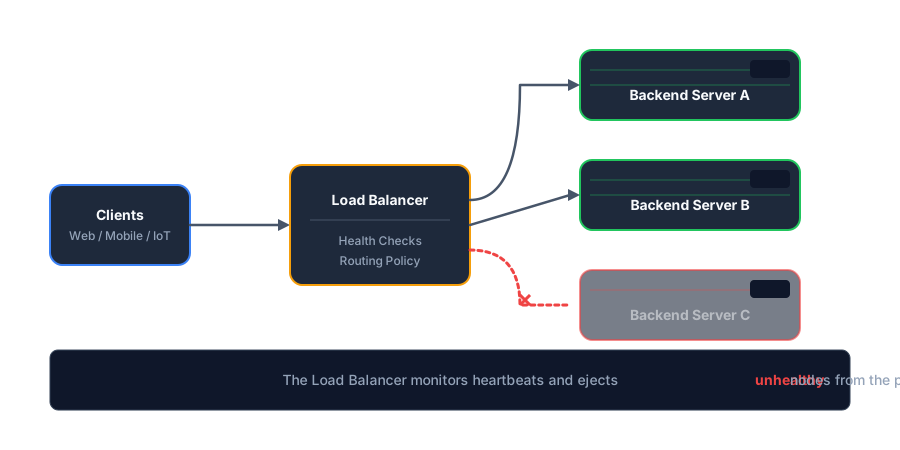
1. Why Use a Load Balancer?
Section titled “1. Why Use a Load Balancer?”- Scalability: add/remove instances without changing client behavior.
- Availability: route away from unhealthy nodes.
- Performance: distribute load based on policy and health.
- Safe deployments: rolling, blue/green, canary traffic splits.
Without a load balancer, one server outage or traffic spike can affect the full system.
2. Routing Algorithms (When to Use What)
Section titled “2. Routing Algorithms (When to Use What)”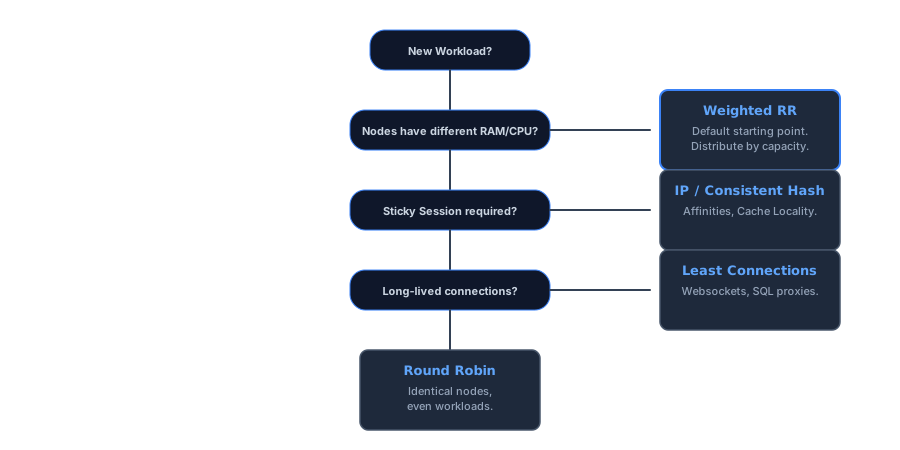
| Algorithm | How it picks backend | Best when | Risk |
|---|---|---|---|
| Round robin | Rotate servers in order | Similar instances | Ignores live load |
| Weighted round robin | Rotate with capacity weights | Mixed-size instances | Weights can become stale |
| Least connections | Fewest active connections | Long-lived requests/websockets | Connection count != true load |
| Least response time | Fastest current responder | Variable latency workloads | Needs continuous telemetry |
| IP hash / consistent hash | Same client -> same server | Affinity/state locality | Uneven load possible |
| Random (power of two choices) | Random sample, pick better | Very large pools | Less predictable fairness |
Rule of thumb:
- Start with weighted round robin + health checks.
- Move to least-connections/least-latency when workload is uneven.
3. Health Checks and Failure Handling
Section titled “3. Health Checks and Failure Handling”Production balancers should:
- use active health checks (
/health, TCP checks), - eject failed backends quickly,
- retry with bounded budget,
- avoid retry storms with backoff/circuit breaking,
- support connection draining during deploys.
Interview line:
“I treat load balancing and health checks as one system; routing without good health signals causes cascading failures.”
4. Stateful vs Stateless Balancing
Section titled “4. Stateful vs Stateless Balancing”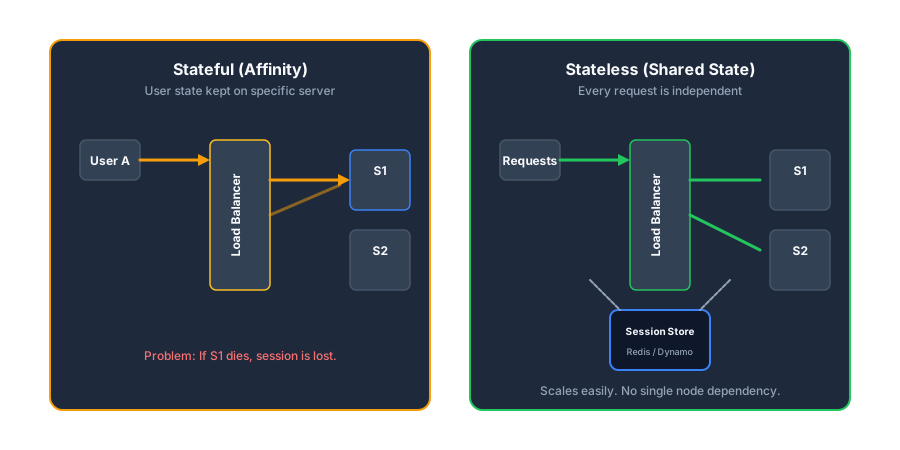
| Mode | How it works | Pros | Cons |
|---|---|---|---|
| Stateful affinity | Same user/session tends to hit same backend | Session locality, cache hits | Harder failover and rebalance |
| Stateless routing | Every request routed independently | Easy scaling and recovery | Needs shared session/state store |
Preferred pattern:
- Keep balancer stateless.
- Externalize session/state (Redis/DB) when possible.
- Use sticky sessions only when unavoidable.
5. Layer 4 vs Layer 7 Balancing
Section titled “5. Layer 4 vs Layer 7 Balancing”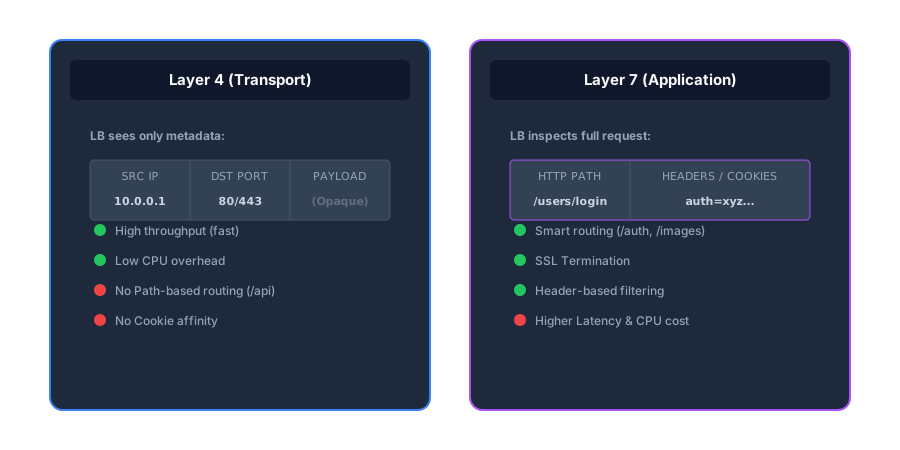
| Layer | Routes by | Strength | Limitation | Typical use |
|---|---|---|---|---|
| L4 (transport) | IP + port + connection metadata | High throughput, low overhead | No HTTP-aware routing | TCP/UDP services, simple pass-through |
| L7 (application) | URL, host, header, cookie, method | Smart routing, auth/policy aware | More CPU/latency overhead | API gateways, multi-tenant HTTP apps |
Examples:
- Route
/api/*to API service and/static/*to CDN/backend at L7. - Use L4 for raw TCP services where deep inspection is unnecessary.